
 Jack Paul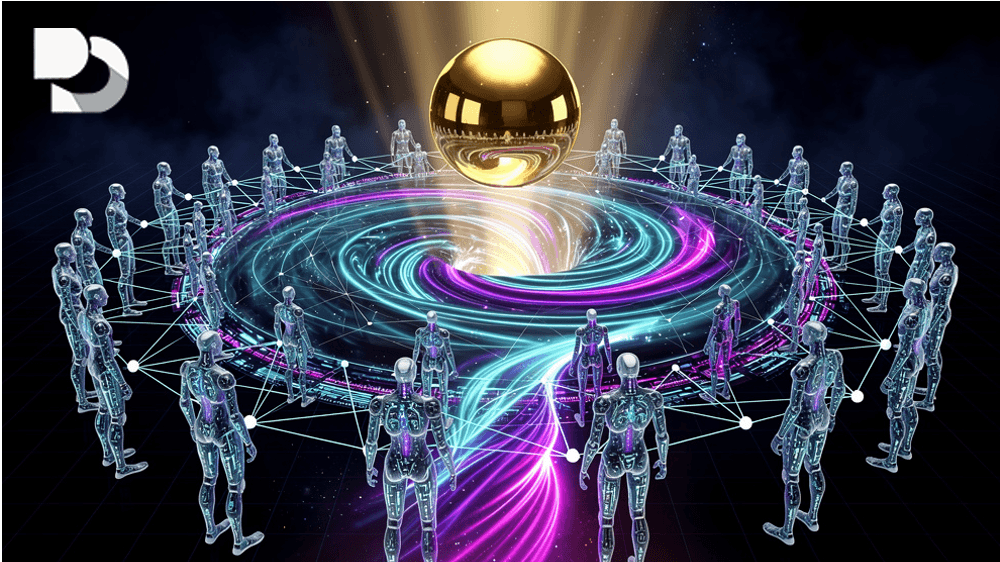
OpenAI says an unreleased experimental AI system has produced a proposed proof for the Navier-Stokes existence and smoothness problem. The problem is one of the seven Millennium Prize Problems and carries a $1 million award. The equations describe how fluids like water and air move. The open question asks whether a smooth flow can break down and create speeds that grow without limit.
How the system worked
According to OpenAI, about 10,000 agents worked together for 88 hours. They exchanged 2.7 million messages and generated roughly 130 billion tokens. An internal model, which OpenAI says is more capable than GPT-6 Astra, found the result. Astra then spent 17 hours formalizing and checking the proof. The proof describes a fluid vortex that stretches and concentrates until its speed blows up in finite time, while total energy stays finite.
Real fluids cannot move infinitely fast under current physics. At extreme scales, the assumption that a fluid is one continuous substance would stop matching physical reality. That gap matters. Navier-Stokes equations are used in aircraft design, weather forecasting, and blood-flow research. A better understanding of where the equations break down could help scientists model extreme and turbulent flows. But any practical effect will take time.
Why mathematicians are pushing back
There is already controversy over how independent the result was. NYU mathematician Tristan Buckmaster and Anthropic researcher Levent Alpöge were separately working on a closely related fluid-dynamics problem. They used AI tools in their research. Buckmaster questioned whether unpublished work entered into OpenAI products could have influenced the company’s model. He made the point in posts on Mastodon. That concern does not by itself disprove the proof. It does raise questions about priority, attribution, and how closed AI systems absorb outside ideas. Mathematicians will likely want more details, not just a company blog post.
What comes next
The bigger implication may be the system that found the proof. If thousands of AI agents can attack a 90-year-old mathematical problem in days, the same method could be aimed at hard problems in materials science, energy, aerospace, and medicine. That is a big if. AI-generated proofs still need checking. Formal verification helps, but it is not the same as broad acceptance by the field. For now, OpenAI has a striking claim, a contested process, and a math problem that no one has fully settled. The real test is whether other researchers can reproduce the argument and agree it holds. Until then, the $1 million prize remains unclaimed.