
 Jack Paul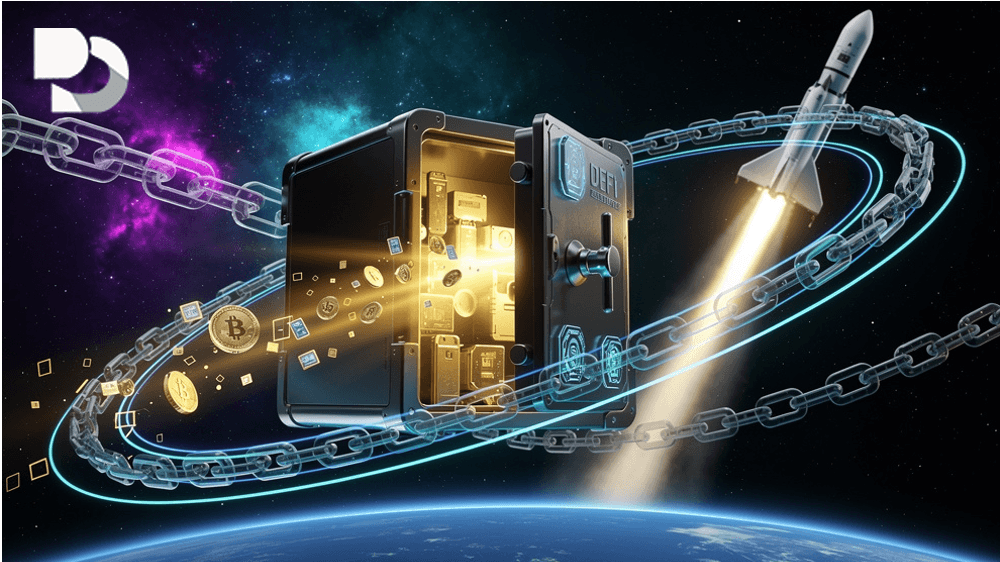
Investment firm Dialectic says it is preparing a DeFi vault called Starloop that will let holders of tokenized SpaceX exposure borrow against their positions instead of selling them. According to a post on X from August 31, the vault is expected to launch in September 2026.
The setup works like this. A depositor puts a tokenized SpaceX position into the vault. That position is used as collateral in blockchain lending markets. The vault borrows stablecoins, following preset loan-to-value ratios, and then sends those funds into strategies that aim to return more than the borrowing costs. Positions are monitored and adjusted as collateral values, interest rates, and yield opportunities move.
The vault runs on Makina’s non-custodial system, with risk settings and authorized actions written onchain. Base, Coinbase’s layer-2 network, handles execution. Dialectic’s Meccanico division manages the strategy.
Why Dialectic thinks SpaceX is undervalued
Dialectic’s argument rests on SpaceX’s recent numbers. The memo, published on Substack on August 28, points to second-quarter revenue of $7.8 billion, up 92% from a year earlier. Adjusted EBITDA came to roughly $3.5 billion, nearly three times higher than the year-ago figure. Dialectic also cites 12 million Starlink subscribers, 1.4 gigawatts of nominal computing capacity, and around $100 billion in cash and marketable securities at the end of the quarter.
By Dialectic’s calculation, blended fair value for SpaceX shares is about $286. The latest closing price it mentions is $143.69 on August 31. That gap is the core of the thesis. Dialectic argues the market still treats SpaceX as a collection of separate pieces rather than one integrated company.
Coinbase tokenized stocks add context
The timing matters. On August 24, Coinbase launched tokenized stocks on Base using its B20 standard. The tokens are meant to represent actual shares and are held with a regulated custodian. They can move across Base DeFi apps and be used as collateral in Aave. Dialectic’s vault is part of a broader push to use tokenized equities in DeFi lending.
Still, early liquidity is thin. Galaxy Research estimates the combined market capitalization of the initially circulating Coinbase tokens, covering NVIDIA, Meta, Apple, and Alphabet, was around $7.5 million. Coinbase also created a SpaceX contract under the ticker SPCX, but it had no circulating supply at launch. U.S. users cannot access these tokens while the market waits for the SEC’s so-called innovation exemption for onchain stock trading.
There is also a legal question. Galaxy’s Alex Thorn pointed out that Coinbase describes its tokens as real shares and also as direct claims on a share. With these structures, the tokenholder’s legal relationship is with a special purpose vehicle, not with SpaceX itself. Shareholder rights depend on the issuer’s terms.
Demand for SpaceX exposure is not hard to find. In June, crypto traders generated more than $1.2 billion in Hyperliquid perpetual futures volume while trying to price the stock, even though those contracts carried no ownership rights. Starloop offers a different route. The open question is whether real, verifiable collateral will actually be available onchain when the vault opens in 2026.