
 Karla Barker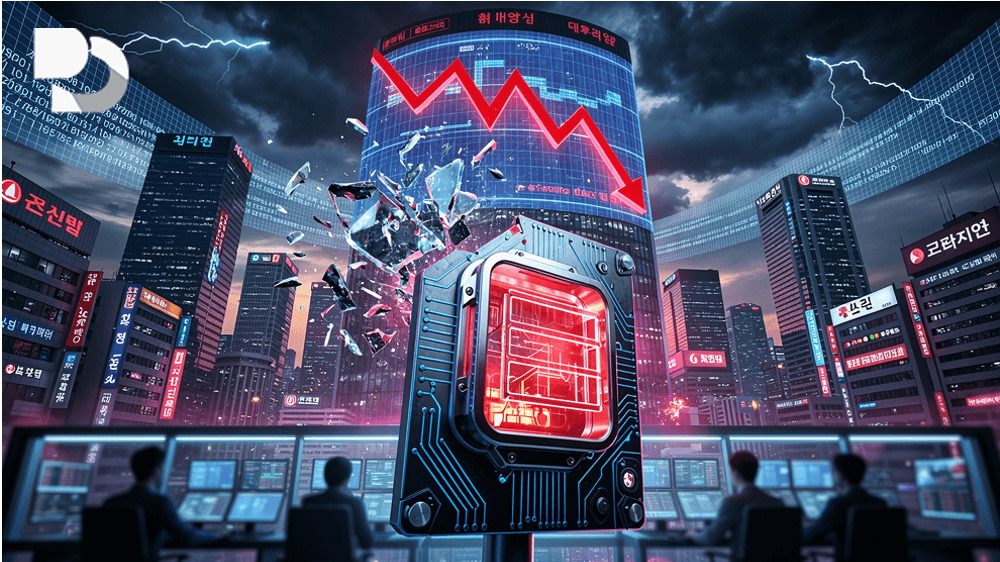
The South Korean stock market experienced a severe shock on June 8, 2026, as the KOSPI index dropped more than 8% within the first 20 minutes of trading. The steep decline triggered a circuit breaker, temporarily halting all trading activity. The index fell into the 7,500 to 7,600 range, marking one of its sharpest single-day drops in recent memory.
Tech Stocks Lead the Selloff
The selloff was overwhelmingly driven by technology stocks. Samsung shares fell about 11%, while SK Hynix and other semiconductor firms also came under heavy pressure. The downturn was not isolated to South Korea. Asian tech stocks broadly declined, with SoftBank dropping more than 7% and TSMC and Hon Hai also seeing significant losses. The weakness followed weaker-than-expected revenue guidance from Broadcom, which spooked investors already worried about high valuations in the AI sector. Broader geopolitical concerns added to the unease, prompting a reassessment of risk across the board.
Currency Weakens to Crisis Levels
The South Korean won also weakened sharply, falling to levels not seen since the 2008 financial crisis. This added to the sense of market stress, as currency weakness often amplifies selling pressure for foreign investors. Market participants are now watching closely to see if authorities will introduce additional measures to stabilize trading conditions.
Analysts See a Technical Correction
Despite the severity of the drop, some analysts view it as a temporary overreaction. Goldman Sachs’ chief Asia-Pacific equity strategist, Timothy Moe, said the selloff is likely to be remembered as a technical correction rather than the start of a prolonged downturn. He noted that the underlying fundamentals supporting the market remain strong. Other analysts also see potential for a recovery, arguing that the initial plunge reflected a reaction to U.S. market weakness and a broader reassessment of risk, not a deterioration in South Korea’s economic outlook. Recent technology partnerships, including those with Nvidia, continue to support longer-term growth expectations.
While volatility is unsettling, some market participants point out that sharp declines can create opportunities for investors willing to look beyond short-term price swings. For now, all eyes are on whether the KOSPI can stabilize when trading resumes.