
 Curtis Moore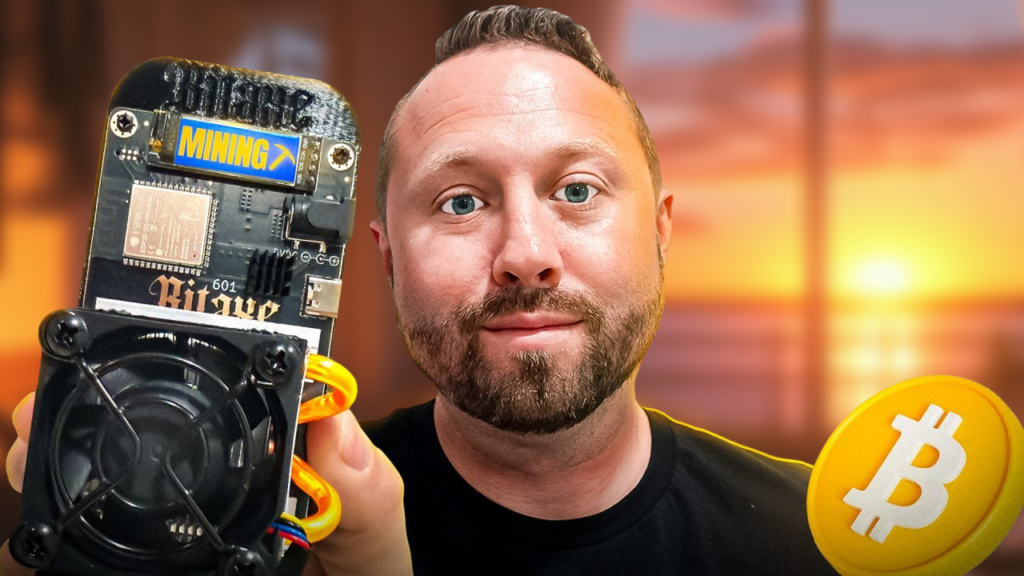
An exclusive interview with HobbyistMiner, crypto mining content creator and streamer
Five weeks of live attempts. One unforgettable moment. When The Hobbyist Miner caught a Bitcoin Cash block live on stream using NiceHash’s EasyMining platform – no ASICs, no data center, no industrial infrastructure – his chat erupted in real time. We sat down with him to talk about what that moment felt like, why the myth of solo mining’s death needs to be buried for good, and where the hashrate economy is taking independent miners next.
How did you and your viewers react when you caught that block live on stream? What was going through your mind at the time?
The moment that Bitcoin Cash block hit live on stream, the entire chat absolutely exploded. It was pure chaos in the best way – messages flying, people celebrating, everyone realizing at the same time what had just happened. And the crazy part is, this wasn’t just a random attempt. For the last five weeks during my Tuesday live streams, I’ve been trying my luck solo mining Bitcoin, Bitcoin Cash, and even Scrypt on NiceHash’s EasyMining platform. So the anticipation had been building every single week. This was the first time hitting a block, and you could feel that release of energy from everyone watching.
For me, it was this mix of shock, adrenaline, and instant focus. My first thought was, “Alright, let’s get this over to my wallet ASAP so I can convert it to Bitcoin.” I’ve been stacking BTC aggressively while the price has dipped, so hitting a block live – after weeks of trying – felt surreal. Sharing that moment with the community made it ten times more electric.
Watch the moment I hit the Bitcoin Cash block during the live stream
There has long been a myth rooted in the industry that solo mining is dead, and today it’s a game exclusively for industrial giants with access to ultra-cheap electricity. Would you say your own experience shows that this isn’t entirely true?
Absolutely – my experience shows that the old myth about solo mining being “dead” just doesn’t hold up anymore. The reality is, solo mining is very much alive, especially at the home-miner level. What’s interesting is that even though industrial giants have access to ultra-cheap electricity, you almost never hear about them pointing their massive hashrate at solo mining. And there’s a reason for that. Solo mining is thrilling, but it comes with zero guarantees. For big mining farms with huge hardware investments and strict payback timelines, they need predictable, consistent revenue. That’s why traditional pool mining remains the dominant model for industrial-scale operations – it’s stable, it’s reliable, and it aligns with their business requirements.
But for home miners, solo mining hits a completely different sweet spot. It’s accessible, it’s exciting, and it gives everyday miners a real shot at catching a block. So no – solo mining isn’t dead. It’s just that the people keeping it alive aren’t the industrial giants… it’s the home miners.
In your opinion, how has the barrier to entry into mining changed over the past few years for independent participants?
The barrier to entry has changed massively – and honestly, in favor of the independent miner. With electricity rates rising across the U.S. and Ethereum going Proof of Stake back in 2022, home miners have been searching for that next big opportunity. That’s exactly why home solo Bitcoin mining exploded. It had a small spark of interest in early 2024, but by August 2025 it absolutely took off and hasn’t slowed down.
One of the biggest reasons is cost. You can get started today for around $150 – enough for a beginner-friendly solo miner and a solid cold storage wallet. And these devices sip power. Most of them use less electricity than a light bulb, which means even people with high electric rates can finally participate in mining again without getting crushed by their utility bill.
On top of that, there’s been a huge surge in people running their own Bitcoin nodes and even their own solo mining pools from home. That’s created a whole new wave of independent miners who aren’t just participating – they’re helping decentralize the network in a meaningful way. So the barrier to entry hasn’t just lowered… it’s opened the door for an entirely new generation of home miners.
How to Get Started Solo Mining Bitcoin for Beginners
Home Bitcoin Node Setup Guide for Beginners
Today we see computing power becoming an independent asset that is bought and sold on the open market in real time, essentially like on a stock exchange. How do you evaluate the formation of such a “hashrate market”?
What we’re seeing now is the emergence of a real Bitcoin hashrate market – where mining power itself is traded in real time. Platforms like NiceHash have turned hashrate into a liquid asset that anyone can buy, sell, or redirect instantly, which is a major shift from the old model of relying solely on the hardware you own.
Demand for Bitcoin hashrate has grown fast as more miners look for flexible ways to participate, and in parallel we’re seeing similar growth in AI compute marketplaces. Both trends point to the same reality: compute is becoming a commodity. For home miners, this new hashrate market opens the door to participate in Bitcoin mining in ways that simply weren’t possible a few years ago.
Industrial pools optimize their business through the scale of their facilities and energy contracts. What is the strategy of an independent network participant today?
Industrial pools win through scale – massive facilities, long-term energy contracts, and predictable revenue. Independent miners take a completely different approach. Our strategy is all about flexibility. We can pivot between solo mining, traditional pools, compute-rental platforms, and even AI workloads depending on what’s most profitable at the moment.
We also lean into low-power, high-efficiency hardware that keeps costs down and lets us stay competitive even with rising electricity rates. And many home miners are running their own nodes or small solo pools, giving them more control and deeper participation in the network. So while industrial giants optimize for scale, independent miners optimize for agility. We move fast, adapt quickly, and take advantage of new opportunities as the hashrate market evolves.
Do you believe that the free trade of computing power helps return Bitcoin to its original idea of decentralization, giving an independent voice to those who don’t have the resources to build data centers?
The hashrate market has been one of the biggest topics of the past year. With the surge of interest in solo mining, a lot of people have chosen not to invest in hardware at all and instead focus purely on renting hashrate through marketplaces like NiceHash and Braiins. With very little capital, anyone can rent massive amounts of power – even at the petahash level – for an hour or two.
That’s opened the door for home solo miners to participate at a scale that would normally require serious hardware, infrastructure, and electricity costs. It gives people who don’t have the resources to build data centers a real voice in the network again. Whether this shift increases decentralization or concentrates it in new ways is still being debated, but there’s no question that the free trade of hashrate has created new opportunities for independent miners to participate in Bitcoin in ways that simply weren’t possible a few years ago.
Where do you think the industry is heading? Will owning physical hardware be a mandatory requirement in 5 years, or will the market completely transition to managing hashrate as a pure financial instrument?
I think the industry is heading in a fantastic direction because we’re finally giving miners something they’ve never really had before: choice. Everyone’s situation is different – whether it’s capital, electricity rates, technical skill, or whether you’re a home miner or running an industrial-scale operation. Having multiple paths to participate is critical.
That said, physical hardware will always be required. Bitcoin doesn’t exist without real machines hashing somewhere. What’s changing is how independent miners access that hashrate. As the network continues to grow and massive amounts of new power come online, home miners may need to rely more on hashrate marketplaces to compete at higher levels. These platforms give smaller participants a way to scale their efforts without the upfront cost of hardware, infrastructure, or high electricity bills.
But I still believe every home miner should own at least one solo Bitcoin miner. It’s inexpensive, low-power, and keeps you directly connected to the network. So in five years, I don’t think it’s an either-or scenario. We’ll see a hybrid model – physical hardware for those who want it, and financialized hashrate markets for those who need flexibility. And that balance is what keeps the ecosystem healthy.
Your block was mined without purchasing and configuring ASICs. For those who understand the basics of Bitcoin but have never encountered the hash power market – how exactly was your process set up technically and economically during the stream?
The easiest way to explain it is this: NiceHash is a marketplace where you can buy hashrate instead of owning or configuring ASIC hardware yourself. One part of their platform is called EasyMining. It lets you pay with Bitcoin and choose a package based on your budget.
They offer different package sizes – Small, Medium, and Large – and depending on the coin, prices can range from around $6.50 up to about $670. What makes it simple is that you don’t need any hardware at home. You just pick the coin you want to solo mine. They support several options like Kaspa, Ravencoin, Zcash, Scrypt, Bitcoin Cash, and Bitcoin.
For my stream, I chose the Bitcoin Cash Silver M package, which cost about $69 at the time. All I had to do was enter my Bitcoin Cash wallet address and click “Buy Package.” Once I did that, the rented hashrate started solo mining Bitcoin Cash automatically for about two hours, at an average of 0.0206 EH/s. So technically and economically, it was very straightforward – no ASICs, no setup, just selecting a package, paying with Bitcoin, and letting the rented hashrate run.
You used the NiceHash infrastructure. How important is it for the development of the industry to have such transparent platforms that route computing power and connect sellers directly with buyers?
Platforms like NiceHash play a critical role in the evolution of the mining industry. Their hashrate marketplace doesn’t just support traditional pool mining – it also enables solo mining at scale, which has been a major benefit for miners of all sizes. For home miners, the EasyMining platform provides a simple, hardware-free way to participate in solo mining without the upfront cost of equipment or the burden of electricity expenses.
On the other side of the equation, NiceHash also gives industrial operators a way to offer their ASIC hashrate to the marketplace at a premium. That creates a healthy ecosystem where both buyers and sellers benefit. Because of this marketplace dynamic, NiceHash often pays out significantly more than traditional Bitcoin mining pools, which further incentivizes participation. Having transparent, well-structured platforms that directly connect compute sellers with buyers is essential for the industry’s growth. It increases accessibility, improves efficiency, and ultimately strengthens the broader mining ecosystem.
What would you advise people who want to practically understand how the mining economy works but are not ready to face the barriers of buying equipment and dealing with complex setups?
For anyone who wants to understand how the mining economy works but isn’t ready to buy hardware or deal with complex setups, my biggest recommendation is to start with education. When I first got started back in 2020, I spent weeks watching YouTube creators like Red Panda Mining, VoskCoin, Son of a Tech, Red Fox Crypto, and Your Friend Andy just to learn the basics of home crypto mining. That foundation was invaluable, and today there are even more high-quality resources available.
I always encourage people to spend a few weeks learning from trusted creators and reputable sources before making any financial commitment. Understanding wallets, network difficulty, hashrate markets, and solo mining will give you a huge advantage. Once you feel confident, you can explore beginner-friendly options like a small solo Bitcoin miner, a cold storage wallet, or even renting hashrate on NiceHash EasyMining to experiment without owning equipment. Education is key – taking the time to understand the ecosystem first will make everything that follows smoother, safer, and far more rewarding.
How To Start Crypto Mining | Full Beginners Guide – in collaboration with Red Fox Crypto