
 Jack Paul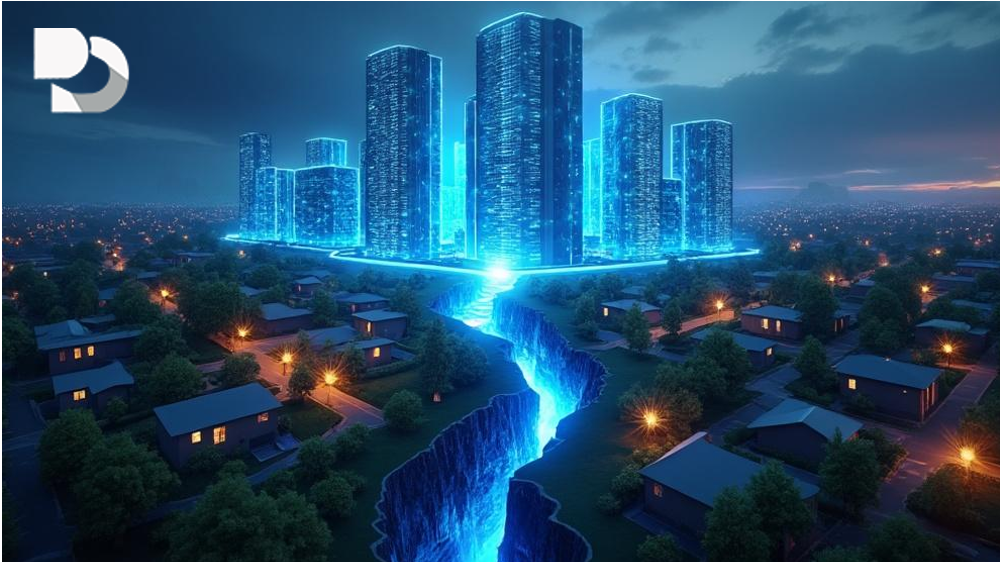
Growing resistance to data center projects
I think we’re seeing something interesting happen with AI infrastructure. Data centers are expanding quickly across the United States, but there’s this growing pushback from local communities that might actually slow things down. A new report from the Brookings Institution suggests that disputes over electricity use, water consumption, and environmental impact are becoming real obstacles for these projects.
It’s not just about the technology anymore. People are worried about their communities, about resources, about what these massive facilities mean for their daily lives. The report points out that data centers consumed about 183 terawatt-hours of electricity in 2024. That’s roughly equivalent to Pakistan’s entire annual energy demand, which puts things in perspective.
Community concerns gaining traction
Shaolei Ren, an associate professor at UC Riverside, makes a good point about this. He told Decrypt that local concerns about water use, public health, electricity costs, and noise are actually valid. They should be addressed before construction begins, not after. “Ultimately, the metric that really matters is community satisfaction,” he said. “And that is what we should be optimizing for.”
There’s a growing recognition that community voices matter. Data centers should be planned and built in alignment with local interests, not just technical or economic objectives. But of course, as Ren notes, the first step is measurement. You can’t improve what you don’t measure.
The political and economic landscape
This comes at a time when demand for computing power is ramping up significantly. The Trump administration has been supporting AI data center expansion, and in January 2025, there was that Stargate announcement—a $500 billion AI infrastructure initiative backed by OpenAI and Oracle. Even then, there were calls for long-term safeguards to ensure communities aren’t left with data centers that deliver little benefit.
Major tech firms like Amazon and Nvidia are making multibillion-dollar investments to expand data center and AI infrastructure. According to Data Center Map, there are nearly 4,000 data centers in the U.S. and about 10,700 worldwide. Much of the new development is concentrated in the American South—North Carolina, Georgia, Virginia, Louisiana, Mississippi, Alabama, South Carolina, and Tennessee.
Proposed solutions and community agreements
Local leaders and advocates argue that data centers are often built in low and middle-income areas that lack the political influence to stop them. To address this, Brookings is calling for legally binding community benefit agreements as an alternative to informal negotiations and undisclosed development contracts.
These agreements would define costs, subsidies, and tax revenues while setting enforceable commitments for jobs, electricity and water use, and pollution. The report suggests that well-crafted community benefit agreements can address public concerns and mitigate known problems of data centers.
Greater transparency on these fronts would help assuage the worries of the American public. The Brookings report warns that left unchecked, these community concerns could slow down rapid construction of data centers, weaken AI growth, and slow AI revenue streams. All of which would limit the AI benefits promised by tech firms and government officials.
It’s a complex situation. On one hand, data centers are critical to the artificial intelligence technologies that undergird the digital economy. Without abundant data centers, the digital revolution could potentially stall. But on the other hand, communities have legitimate concerns that need addressing. Finding that balance between technological progress and community wellbeing—that’s the real challenge moving forward.